
The 10 Best Banjos for Beginners (2026)

Whether you’re a bluegrass lover or looking for a good starter banjo, there are a lot of options on the market. With so many models out there, knowing where to start can be challenging. That’s why I have rounded up the ten best banjos for beginners.
My main recommended banjo is the Ibanez B50, known for its sweet and vintage sound, sapele back and sides, and a purpleheart fingerboard with dot position markers. Its 24-lug configuration controls head tension, while the open-gear tuners handle string tuning.
My second recommended banjo is the Jameson Guitars 5-String Banjo. It features a closed solid back mahogany resonator, 24 chrome-plated brackets, and a purpleheart fretboard for a pleasant acoustic sound and tone.
For this article, I paid close attention to the sound quality, materials, and build quality of each banjo. I included both budget-friendly options and higher-end banjos.
Contents
- The Best Banjos for Beginners (2026) – At a Glance
- 1. Ibanez B50
- 2. Jameson Guitars 5-String Banjo
- 3. Deering Goodtime 5-String Banjo
- 4. Costzon 5-String Banjo
- 5. Gold Tone AC-1
- 6. Gold Tone AC-12
- 7. Vangoa 5-String Banjo
- 8. ADM 5-String Banjo
- 9. Pyle-Pro PBJ60
- 10. Ibanez B200
- Key Features and Specs to Look Out For in a Beginner Banjo when Buying
- Buyers Guide
- FAQs
- Conclusion
The Best Banjos for Beginners (2026) – At a Glance

Now let’s move on to the full list:

1. Ibanez B50
The Ibanez B50 mixes traditional banjo looks with a straightforward five-string design. Its resonator makes it a sensible first choice if bluegrass is your main interest, with more forward projection than an open-back model. You can still use it for other styles, so you do not have to settle on one technique before starting lessons.
Pros
- Great quality for the price
- Easy to set up and play
- Beautiful design and appearance
- Consistent sound and performance
- Traditional five-string resonator design
Cons
- Gig bag or case not included
The Ibanez B50 offers good quality for its cost. Its 24 lugs let a setup technician adjust the head tension evenly. Like other banjos, it uses a floating bridge whose position matters for intonation; it is not an adjustable guitar-style bridge. The open-gear tuners add a vintage touch while keeping string tuning straightforward.
The B50 has a natural finish, sapele back and sides, and an okoume neck paired with a purpleheart fingerboard. Its dot position markers make finding your way around the neck straightforward. I like the traditional appearance, but a comfortable setup and even fretwork matter more to a beginner than the choice of decorative details.
Specs
- Design: 5-String
- Neck Material: Okoume
- Back and Sides Material: Sapele
- Fingerboard: Purpleheart
2. Jameson Guitars 5-String Banjo
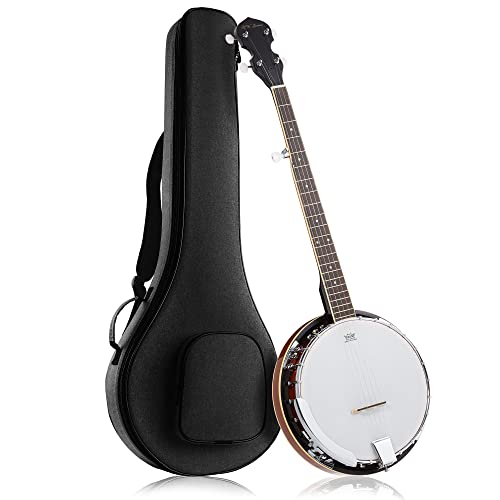
The design of this budget-friendly banjo is fairly decent, featuring a mahogany neck, a closed-back mahogany resonator, and a purpleheart fingerboard. Its quality materials not only make it look beautiful but also help produce excellent sound. The instrument reflects great attention to detail, making it a pleasure for both the eyes and ears.
Pros
- Excellent value for the price
- Suitable for beginners
- Beautiful design and appearance
- Warm tone and good sound quality
- Detachable resonator for versatility
Cons
- May require setup work after the purchase
- Tuning pegs may not be the most accurate
A significant upgrade in this banjo is the geared 5th tuner side peg, which is better than traditional friction tuners. This improvement allows for better sound control and tuning stability, ensuring that the instrument stays in tune during each performance.
What sets this 5-string banjo apart is its sound, suitable for playing various music styles. From energetic bluegrass and expressive clawhammer to exploring the complex worlds of folk, country, and rock, this instrument’s adaptability and beautiful sound will appeal to beginners.
Specs
- Design: 5-String
- Body Material: Mahogany
- Neck Material: Mahogany
- Fretboard Material: Hardwood
3. Deering Goodtime 5-String Banjo
The Deering Goodtime Banjo represents top-notch American workmanship. Carefully made with high-quality materials like maple for the body and neck, and a frosted mylar head, this banjo not only looks attractive but also has excellent sound quality suitable for various music genres.
Pros
- Lovely sound quality and tonal clarity
- Excellent craftsmanship and built with quality materials
- Lightweight and easy to handle
- Stays in tune consistently
- Good value for the price
- Patented Goodtime Smile Bridge produces a fuller sound
Cons
- Open-back design offers less forward projection than a resonator
- Does not come with a strap or case
- A bit pricey
Featuring the unique Goodtime Smile Banjo Bridge, the Deering Banjo has been skillfully designed to improve vibration and resonance. This innovative bridge produces rich and expressive tones, allowing the banjo to reach its full potential. Its open-back design, along with its lightweight build, makes it a great option for both new and experienced players.
It has a flexible 5-string setup and a classic look featuring elegant hardwood bowtie inlays. The comfortable 22-fret low-profile maple neck works well for different playing styles and techniques, making the Deering Banjo an amazing blend of versatility and musical depth.
Specs
- Design: 5-String
- Body Material: Maple
- Neck Material: Maple
- Fretboard: Maple

4. Costzon 5-String Banjo
The standout feature of the Costzon 5-String Banjo has to be its strong plywood frame construction. Made for high quality and lasting durability, this five-string banjo gives an excellent playing experience. With its manageable size and stylish brown color, it’s suitable for many players. It is beginner-friendly and offers good value for money.
Pros
- Great for beginners
- Affordable price
- Includes useful accessories
- Solid and durable construction
- 24 brackets for even head tension
- Geared 5th tuner for better tuning stability
Cons
- String quality is not the best
- The strap and carrying case are low quality
- May require a professional setup for the best performance
The Costzon Banjo delivers versatile classic sounds for various music styles like country, folk, bluegrass, and modern rock. Its 24 adjustable brackets control head tension, which is part of setting up the banjo. The fretboard should feel comfortable under your fingers; a good setup matters more than expecting one wood to define its sound.
This lightweight but strong beginner banjo comes with a top-quality REMO drumhead for wonderful sound output that echoes with every note. The tough and corrosion-resistant sapele wood back and sides help the instrument keep its sound quality for a long time.
Specs
- Design: 5-String
- Top Material: Rosewood, Sapele
- Back Material: Sapele
- Fretboard: Maqiao rosewood
5. Gold Tone AC-1
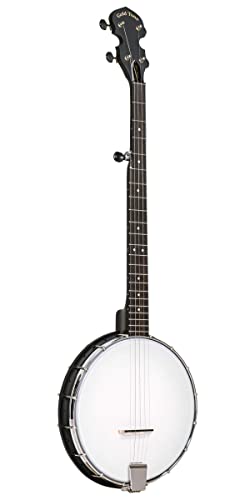
The Gold Tone AC-1 is a good starting point if you want a five-string banjo that is easy to carry and comfortable to hold. Its composite rim keeps the weight down without making it feel like a toy. The open-back design suits practice at home and gives you room to try both clawhammer and three-finger playing.
At around 3.75 pounds, this is one of the lighter choices here. The full-size neck has 22 frets, and the Zero Glide nut is a useful part of a beginner instrument’s setup. I would choose it over a heavy resonator model if holding the banjo comfortably matters more than maximum projection.
Gold Tone includes a gig bag, so there is no need to buy one before taking your first lesson. You will still want a tuner and a teacher or setup technician to check the bridge position and action. The AC-1 does not include a resonator: that is a sensible tradeoff for its light weight, but bluegrass players who need to cut through a group may prefer the Ibanez B50 or Jameson.
Pros
- Light composite rim and comfortable open-back design
- Full-size five-string neck with 22 frets
- Zero Glide nut and included gig bag
Cons
- Less forward projection than a resonator banjo
- Basic finish rather than a traditional wooden rim
Specs
- Design: 5-string open-back
- Rim: 11-inch composite
- Neck: Mahogany
- Frets: 22
- Weight: Approximately 3.75 lb

6. Gold Tone AC-12
The Gold Tone AC-12 gives a beginner a more specific reason to choose an open-back banjo. Its larger 12-inch pot and Renaissance head suit a rounder sound, while the wider neck gives your fretting hand more room. This is my choice here for someone who wants to start with clawhammer rather than a resonator-led bluegrass setup.
The frailing scoop is the important difference from the AC-1. It leaves space to strike the strings over the end of the neck, a position many clawhammer players enjoy. The standard AC-12 has 18 frets and a full-length scale, so it is not the short-scale AC-12A or the fretless AC-12FL. Make sure you order the standard fretted model described here.
The composite construction and included gig bag make it practical for lessons and regular practice. It weighs about five pounds, so the AC-1 remains the lighter choice. I like the AC-12’s wider nut for players who feel cramped on a narrow neck, but smaller hands may find the AC-1 or Goodtime easier to get around.
Pros
- Wider neck and frailing scoop for clawhammer
- 12-inch pot with Renaissance head
- Standard fretted full-scale neck and gig bag
Cons
- Wider neck may not suit smaller hands
- Less directed volume than a resonator model
Specs
- Design: 5-string open-back
- Rim: 12-inch composite
- Frets: 18 with frailing scoop
- Nut width: 1-7/16 inch
- Weight: Approximately 5 lb

7. Vangoa 5-String Banjo
The Vangoa 5-String Banjo comes with a high-quality Remo drum head that produces a lovely sound and mixes different tones. I appreciate the nice look and well-crafted design. Known for its excellent performance, this drum head guarantees a pleasant and captivating banjo-playing experience. It offers a rich and full sound.
Pros
- Beautiful design and appearance
- An impressive instrument for a modest price
- Well-constructed and a great fit
- Easy to set up and tune
- Comes with useful accessories
- Durable mahogany material
Cons
- Needs initial setup
- May require professional servicing for optimal playability
- Subpar quality of provided strings
A notable feature of this banjo is its adjustable truss rod, which lets a technician set the neck relief. String height also depends on the bridge and the rest of the setup. If the action feels uncomfortable, have those parts checked together rather than treating the truss rod as a simple height control.
This instrument can switch between a resonator and an open-back banjo, offering a versatile playing experience with different sound styles. Its mahogany resonator not only provides stability and a warm sound but also displays a beautiful medium-brown wood grain for visual appeal. The 24 chrome-plated brackets hold the head and allow its tension to be adjusted evenly.
Specs
- Design: 5-String
- Top Material: Mahogany
- Back Material: Mahogany
- Neck Material: Mahogany

8. ADM 5-String Banjo
The ADM Banjo comes complete with a high-quality Remo drum head for vibrant and clear tones. The attractive design and quality materials make it perfect for beginners and is suitable for a variety of musical genres like country, folk, bluegrass, or modern rock.
Pros
- Beautiful design and good craftsmanship
- Great value for a beginner banjo
- Comes with essential accessories (tuner, strap, etc.)
- Adjustable truss rod for neck relief
- Remo drum head and walnut fingerboard for quality sound
Cons
- Fragile construction requires proper handling
- Strings may snap easily during tuning
The ADM Banjo Kit has an adjustable truss rod for setting neck relief. This is useful when the instrument needs a setup, but it does not change the banjo to suit a particular genre. A beginner should ask a teacher or technician to check the neck, bridge position and action before making adjustments.
With the ADM Banjo, you don’t need to choose between comfort and appearance, as it provides a chrome-plated armrest that’s both stylish and comfortable. The sleek design enhances playing convenience, allowing for long sessions without fatigue.
Specs
- Design: 5-String
- Top Material: Walnut, Sapele
- Back Material: Walnut, Sapele, Wood
- Body Material: Mahogany

9. Pyle-Pro PBJ60
The Pyle-Pro PBJ60 uses a shabili (sapele) body, a maple bridge and a rosewood fretboard. Its traditional five-string layout and geared fifth-string tuner make it a straightforward beginner option. I would pay particular attention to the initial bridge position and setup rather than relying on the wood names alone to judge its sound.
Pros
- Affordable price for a beginner banjo
- Surpasses expectations in quality and sound
- Lightweight and portable
- Geared 5th tuner for better tuning and playability
- Beautiful design
- Constructed from quality materials
Cons
- Some assembly and setup required
- Bridge installation may require research or knowledge, instructions not included
If you want a decent instrument, this banjo has a Rosewood fretboard with a shiny finish that looks amazing. It also has White Jade tuner pegs to help with tuning stability and accuracy. The banjo’s design is very detailed and brings a feeling of elegance to any player.
A big part of the Pyle 5-string banjo’s excellent performance is the REMO M1 drumhead and geared 5th tuner. These features show how reliable and playable this instrument is. Apart from all this, I really like its excellent value for the price.
Specs
- Design: 5-String
- Bridge: Maple
- Body Material: Shabili (sapele)
- Fretboard: Rosewood

10. Ibanez B200
The Ibanez B200 is a more substantial resonator option for a beginner who wants room to progress. It has a sapele resonator, an okoume neck and a purpleheart fretboard. Its stronger projection and decorative finish will appeal to bluegrass players, although the extra weight makes it less convenient than a light open-back for long practice sessions.
Pros
- Good quality for the price
- Beautiful design and finish
- Nice sound projection
- Great for beginners to intermediate players
- Acrylic block inlays on the purpleheart fingerboard
- 24-lug configuration on basswood rim
Cons
- Tuning pegs may not hold strings in tune well
- Can be a bit heavy for some
- The metal guard may cause discomfort
- A bit pricey
This banjo is clearly not old-fashioned, featuring a modern dual coordinator rod design and a detailed 24-element lug pattern. The basswood block rim and rolled brass tone ring create a clear, resonant sound, which I appreciate. It also has stylish details like an etched chrome armrest and clamshell tailpiece for comfort.
With a mix of modern and traditional features, this banjo offers plenty of variety. It has a contemporary look with ABS-multi-material resonator binding and acrylic pearl block inlay but retains reliable performance with chrome friction tuners and a 22-fret design. The purpleheart and maple bridge add to the instrument’s beauty and musicality.
Specs
- Design: 5-String
- Neck: Okoume
- Body Material: Sapele
- Fretboard: Purpleheart
Key Features and Specs to Look Out For in a Beginner Banjo when Buying
There are a couple of things you need to consider before committing to a banjo. Some things beginners need to look for in a banjo are the size, quality, sound, and price, among other things.
Size and type of banjo (4-string, 5-string, or 6-string)
When considering the size and type of banjo for beginners, it’s important to understand the differences between the 4-string, 5-string, and 6-string options. The most popular choice for beginners is a 5-string banjo, which is versatile and ideal for various music styles, including bluegrass, folk, and country.
A prime example of a beginner-friendly 5-string banjo is the Ibanez B50, known for its sapele body and straightforward construction and vintage open gear tuners. For those who are more inclined towards playing the guitar, the 6-string banjo-guitar version of the Jameson Guitars Banjo is another solid option.
Quality of materials and construction
In choosing the best banjo for beginners, it’s crucial to consider the quality of materials and construction. A well-built banjo made of superior materials will not only sound better but also last longer and be easier to play.
For instance, the Ibanez B50 5-String Banjo features a sapele body and okoume neck, along with an 11-inch banjo head, which ensures durability and easy maintenance. Similarly, the Jameson Guitars 5-String Banjo uses a closed solid back mahogany resonator as well as a 5-ply maple and mahogany shell for a rich tone.
Price range and budget
When considering the price range and budget for a beginner banjo, it’s essential to find a balance between affordability and quality. Banjos can vary significantly in cost, with higher-end models like the Deering Goodtime Banjo offering exceptional craftsmanship and sound quality at a steeper price. However, if you want a more budget-friendly option, the Jameson Guitars 5-String Banjo and the Costzon 5-String Banjo are great options.
Ease of playability
Ease of playability is crucial for beginners when choosing their first banjo, as it heavily impacts the learning experience and overall enjoyment of playing the instrument. Both the Ibanez B50 5-String Banjo and the Jameson Guitars 5-String Banjo offer features that cater to newcomers, making them ideal for those just starting their musical journey.
Availability of accessories and learning resources
The availability of accessories and learning resources is a crucial aspect to consider when choosing a beginner banjo. A full-featured beginner kit, like the one offered with the Vangoa 5 String Banjo, sets you up for success by providing essential accessories such as a clip-on tuner, adjustable strap, and padded carrying bag. Likewise, the Costzon 5-String Banjo includes a 420D Oxford cloth bag, strap, wiper, and picks in its beginner kit.
Buyers Guide
Picking up a banjo for the first time is an exciting experience; however, choosing the right banjo can be a daunting task. This guide breaks down the top considerations that beginners need to know when purchasing their first banjo, along with recommendations for some of the best beginner banjos available.
Types of Banjos for Beginners
When you first start learning the banjo, you need to decide on the type of banjo you want to play. Some popular options for beginner banjos include the 5-string banjo (like the Ibanez B50), the 4-string banjo, and the Irish tenor banjo. Ultimately, your choice will depend on the music genres you’re most interested in – for instance, 5-string banjos are primarily used for bluegrass and country music, while 4-string banjos are popular in jazz and Irish music.
Open-Back vs. Resonator Banjos
Another important decision is whether to pick an open-back or resonator banjo. Open-back banjos (such as the Deering Goodtime Banjo) are lightweight, have a mellow tone, and are more affordable – making them a great choice for beginners.
Resonator banjos, like the Jameson Guitars 5-String Banjo, have a closed back and produce a louder, brighter tone, making them a good choice for beginners focused on bluegrass as well as players who need to be heard in a group.
Finding a Banjo Instructor
Whether you’re taking in-person lessons or following online tutorials, finding a skilled banjo instructor is crucial for beginners. A good teacher will help you build a solid foundation, correct any bad habits, and inspire you to progress in your banjo journey.
Tips for Banjo Maintenance
Keeping your banjo in good condition is essential for its performance and longevity. Regularly changing strings, ensuring proper humidity levels, and cleaning your banjo (with supplies like those included in the ADM 5-String Banjo Kit) will keep it sounding its best. Have the head tension, bridge position, neck relief and action checked when the instrument needs a setup. Not every banjo has an adjustable truss rod, and neck adjustments are best left to someone familiar with the instrument.
FAQs
1. What type of banjo should beginners consider purchasing?
Choose the string layout for the music you want to learn: five strings for bluegrass or clawhammer, or a four-string tenor for Irish music and some jazz styles. A lightweight open-back can be comfortable, but a resonator banjo is also a sensible first instrument for bluegrass.
2. What is the best material for a beginner banjo?
Wood, composite and metal-rim banjos can all work for beginners. Look for comfortable action, even fretwork, stable hardware and a sound you enjoy; the cheapest material is not automatically the best choice.
3. What brand produces the best beginner banjos?
Brands like Deering, Gold Tone, and Ibanez are widely recognized as producing the best beginner banjos.
4. Are there any necessary accessories that should be purchased alongside the banjo?
A beginner should purchase a high-quality tuner, a carrying case, and finger picks to make the learning process easier.
5. How much should beginners be willing to spend on their first banjo?
Set a budget that includes the instrument, a tuner, a suitable bag or case, and any initial setup work. A playable, well-adjusted banjo is a better starting point than spending more on decoration. Compare the current offers above and leave room for lessons if you can.
Conclusion
The banjo is an interesting instrument for those looking to dabble in country, folk, and bluegrass music. There are a lot of suitable options for beginner banjo enthusiasts on the market with models ranging from budget-friendly to high-end.
My top pick is the Ibanez B50. It has a sweet and vintage sound, mahogany back and sides, and a rosewood fingerboard with dot position markers. Its 24-lug configuration controls head tension, while the open-gear tuners handle string tuning.
My budget pick is the Jameson Guitars 5-String Banjo. It features a closed solid back mahogany resonator, 24 chrome-plated brackets, and a purpleheart fretboard for a pleasant acoustic sound and tone.


